Showing posts with label marketing. Show all posts

Wednesday, October 1, 2014

Why simplicity is key to marketing success

As our world and technology have become increasingly complex, people gravitate toward simple, easily recognizable messages and calls-for-action.


Let's agree: The time of complex visual messaging in marketing and advertising is over. Collages are dead.

A simple image that conveys a single core idea are favoured by marketers and brand managers because they work. In essence, today anything that is not necessary to get to “yes” merely gets in the way. 

It is the difference between the completely uncluttered Google search website with its legendary a single function, and Yahoo search where myriad content has come to obscure its (former) main function. 

The challenge is that arriving at simplicity is hard work. It requires a focused purpose and a great deal of clarity. It requires knowing who exactly your message needs to speak to and convince to pay attention and a deep understanding of what breakthrough communications are about, what they must over come. 

Our brains are designed to edit out information, to ignore clutter, to disregard anything that doesn't look immediately pertinent. 

Great marketing gets past those hardwired gatekeepers. And great marketing has to be singular, direct and address an important target market motivation. 

Hallmarks of effective communications

  1. Purpose
  2. Specific target audience
  3. Relevance to audience
  4. Clarity
  5. Consistency
  6. Suitable medium
  7. Repetition
  8. Multi-channel
  9. Conversation
  10. Evaluate and Learn

Components of effective messaging
  • Message (what you want to say)
  • Redundancy (used to emphasize the message – can be image and text working together)
  • Decoration (Embellishing to increase attractiveness and get attention)

Noise is all the things that interfere with the intended message.  In the arts, as in other sectors, an important issue remains learning to reduce the noise in our marketing and to focus on the single most important audience motivation to connect an experience with that audience. Because, ineffective marketing - the kind that has no clear message which means there is no redundancy or useful embellishment, and therefore there is no noise reduction and results simply in information overload which humans are designed to simply dismiss -leads to "No." 

Embracing the challenge of simplicity means honing a more rigorous process to arrive at effective communications that have the power to connect with your intended audience.


Saturday, September 13, 2014

Marketing Trends - New Media as The Media

Marketing has changed irrevocably over the last 10 to 15 years. While the harbingers of consumer power were evident in the late 1990s, with the advent of the Internet and mobile and then smart phones, the changes have now solidified and they continue to accelerate.

The web is no longer a new media. The body of knowledge and practice of integrated marketing has grown up.

Integration of websites with social networks and mobile apps

Youtube was launched in 2005, Facebook and Twitter came into the public view in 2006. Barely approaching a decade old they have an unprecedented reach ranging from 500 million to 1+ billion users.

Recently, smart phones with touch screens, tablets and e-readers with web access have become ubiquitous.

Great websites have evolved from early "brochure-sites", UseNet groups and List Serves to well functioning hubs of branded transactions with considerable social media integration and mobile connectivity.

Seemingly limitless access to information, easy consumption of entertainment, and creation and sharing of content and experiences have transformed how we behave, what we expect and what we want.

Contemporary marketing more than ever is about compelling stories, co-creating meaning, and making research and purchases easy and immediate. The increasing integration of services like Youtube, Facebook, Twitter and many more – with both desktops and mobile devices and within websites – creates new dynamics between organizations and their customers.

Today, website pages can be shared with a push of a button to a user’s social media universe. They can be used to amplify a use's own brand and they can be used to ridicule or support an organization or a product. It can raise awareness, start conversations or elicit sales through these wider social networks. Similarly, organizations are cross-linking their web sites and social media presence to provide a seamless user experience, going where users are.

Do-it-yourself

Websites used to be expensive custom installations, with the best requiring substantial user research and expert programmers.

Today, WordPress and similar services have become robust DIY web tools that work well, have extensive plug-in options for customization and keep costs low.

Many of these off-the-shelf options also have an embedded option to create a mobile-friendly version of a websites. This is important as more and more users visit websites using their mobile devices and their much smaller screens.

Mobile applications

The ‘appification’ of the online experience has advanced rapidly in the last five years to the point, where man of us retain little awareness that apps use online content, i.e. content that resides on a server elsewhere. The best apps are content and feature rich, while super simply to use.  

Festivals have embraced them to deliver a variety of information and on-site experiences. Here again, there is a build it once and sell it many times philosophy, enabling affordable, ready-made solutions to almost any size event. 

Today, apps live on non-standard operating systems, i.e. apps are developed for the various platforms of smart phones. That means, if resources require development for just one platform, considerable thought has to go into who the target market is and the dominant platforms in use.

The power of accessing rich content through tiny devices that one carries everywhere creates a brand new dynamic of relationship to and expectation of brands. 

Tuesday, February 25, 2014

Social web strategy for the performing arts

"Many arts institutions even allow their audience members to write their own critiques on the organizational website. This is a scary trend." Michael Kaiser, President at Kennedy Centre for the Performing Arts, blogging on HuffPost, a while back.

It's not clear to me whether he thinks the ability of people to engage with each other is positive or negative for the performing arts, but he definitely says it's scary. (He might have meant that with regard to the demise of news-media critics and the rise of patrons providing their opinions online.)

In any case, in 2011, year 16 of the commercial internet, this amazes me.

It is neither scary nor new that arts patrons share their thoughts, reactions and recommendations about performing arts events.

Yes, the speed of this sharing is near instant - and potentially widely distributed - in the age of mobile technologies. Smart companies would want to harness this user generated content (UCG) on their own platforms as much as possible and indeed, they'd participate.

Imagine a social web strategy for a performing arts organization predicated on authentic relationships between their organization, artists and audiences: They might thank audience members for feedback, positive reviews, questions and being interested. The artistic director might comment back when they see a reaction that they want to shift to a different place. They could have a conversation and share information and perspectives. They might answer those "what were they thinking!" questions that people post on Facebook, Twitter or on blogs. Marketing staff could retweet and amplify the positive reviews you get. The company could give the behind the scenes insight, tell the back stories and facilitate creators, actors, musicians, dancers to speak for themselves (many do). They would not abuse these relationship for quick ticket sales, but they might occasionally highlight upcoming shows in their venue and in others. They might rally everyone around the love of the arts and spread it.

Can you imagine the power of these interactions for your company - your brand - in the long run?

For years, user generated content has been coveted by consumer companies and entire strategies have been thought up to get it - using contesting, short codes, value added info, exclusive perks. I used it as part of a place branding project for a city in Eastern Ontario back in 2007 with great results. Dove's Campaign for Real Beauty put an interesting spin on the genre. Today user generated content (the social media) has become ubiquitous through social networks (that's the platforms) and the real challenge is not the generation of it, but the harnessing of the conversation real people are having about you, your services, your products. (Real people is key, because there are all kinds of spam engines, and fake UCG where companies or their agents act as imposters - this is not social and it is not what I am talking about.)

The true irony might lie in what great art has the power to do:

It is supposed to be a conversation; an exchange between orchestra and audience through music; an exchange of ideas in theatre; a kinetic exploration through the body in dance; an entertaining experience (in the best sense of the word). It aspires to be: emotive, beautiful, thought-provoking, stimulating or even transforming. It examines the human condition. It can connect people both to each other and to a higher plane of being in whatever way they choose. It can foster greater understanding across cultures or socio-economic groups. And it does it by carrying on the conversations outside of the performance space.

I think, those arts organizations who have figured out to become part of the conversation are to be congratulated and celebrated. That's why I celebrate the vision and smarts at the National Arts Centre in Ottawa, or Shell Theatre in Fort Saskatchewan, Alberta. (Please add others who do it well in the comments below.)

They may just have realized that the conversation goes on without them anyways. And they can build authentic relationships by inviting audiences not only inside their theatres but inside their web presence, too.

Finally, new audience engagement modes reflect a generational as much as a technological shift. Back in 2006 even Time magazine had figured out the signs of the times by declaring You, yes, YOU, its Person of the Year.

By the way, Twitter and Facebook were in their infancy in 2006. Notably, Time's Person of the Year for 2010, was Mark Zuckerberg. The speed of business has increased tremendously and it demands nimbleness and adaptablility more than ever.

Wednesday, February 5, 2014

Value Innovation: From participation to attendance in the live performing arts

Important to achieving value innovation is responding to and building on what captivates audiences and, sometimes more important, potential audiences.

Today I listened to a really interesting CBC radio call in show on "Why live theatre is dead to you." It is well worth a listen to the wide range of views expressed by callers. Several pointed out that they simply don't know what is available. And that they have had disappointing experiences. (Diagnostically: these are marketing and programming/production issues.) By the way, for most live theatre wasn't actually dead, just not in reach for these and other reasons.

This week is rich with well considered coverage: like this article in the UK's Guardian on What do audiences want I read yesterday.

Not surprisingly, there are examples of arts organizations learning about being relevant in new ways.

At the National Arts Centre Orchestra, a new initiative called Casual Fridays, innovates on the classical concert experience expressly to reach and engage a new and younger audience. This includes a much more casual and friendly concert hall experience. NAC English Theatre (Youtube video) is using inventive marketing campaigns to generate buzz and bring the NAC to the streets of Ottawa to invite patrons to a night at the theatre.

Yet, by and large, the voices of those who continue to hold fast to conventions and traditions and a belief in the arts in and of themselves appear strong. And far removed from the younger generations interests, values and attitudes.

This is the "young audience" (Gen Xers are about 35 to 49 years old today) orchestras, for instance, need to attract in large numbers in order to replace not only aging highly committed patrons, but the revenue they represent. That means quite likely for many orchestras - and theatres and dance, too - not a 1 to 1 replacement strategy but a 3 or even 4 to 1 replacement imperative.

Research on participation and attendance
The Ontario Arts Council affirms in its Ontario Arts Engagement Study (lead by WolfBrown and released in October 2011), that not merely engagement but participation in the arts experience is where it is at from the audiences' perspective.

Key findings from the study include: "Involvement in participatory activities is linked to attendance at audience-based activities – Overall, people who engage in participatory arts activities are more likely to attend audience or visitor-based activities – sometimes at a rate of two or three times higher than those who do not engage in participatory activities."

And it leads the study's authors to ask: "How can arts organizations build bridges between participatory forms of engagement and professional arts performances and exhibits?"

From an institutional perspective the goal has often been to "get bums in seats", ie attendance. Personally, I detest this phrasing, because it reduces the audience in the most unhelpful ways. 

Imagine yourself shift the institutional end-game to the audience perspective. In what ways, if any, would it change your understanding of how to connect meaningfully to audiences and potential audiences? How would this change what you do in your quest to foster specific attending behaviours in audiences, like subscription renewal perhaps or some other repeat purchase?


And, honestly, how effective is your organization at marketing its shows? In the simplest terms, marketing is the process by which services and products are brought to market. Marketing is about the relationships you build and about trust and mutual respect; in my view it is not about "bums in seats." (That is a short-term sales approach.)

Sunday, February 2, 2014

Where's the Blue Ocean for Live Performing Arts?

The past is not the best way to predict the future; especially when the context is highly dynamic, change is rapid, consumer behaviours, values and beliefs have shifted and commonly held internal beliefs (like the one about price elasticity) no longer apply (if they ever did: like the one about price elasticity).

I see the live performing arts in general at a crossroads in these changing circumstances: Which parts of the sector will adapt, which ones will become obsolete, which ones will grow, which ones shrink? What will success for the performing arts look like in the near- and mid-term? I hear about the dominant concerns being "audience development" and stability of direct government funding. As a strategist and marketer I think the dominant focus on these two concerns has not been producing the requisite breakthroughs in most cases.

In essence, I plan to think out loud about the value innovation that the performing arts sector in Canada could undertake to reap awesome rewards through creating uncontested - and valuable - market spaces. There are already examples of Blue Ocean creators in the performing arts: most notable may be billion dollar empires Cirque du Soleil and Apple. Yes, that Apple: Music has already been revolutionized by digital music distribution and most of that is revenue that goes to Apple. That may well speak to the power of owning the de facto 'operating system.'

A Blue Ocean is a strategic construct reverse engineered by W. Chan Kim and Renée Mauborgne. It's a strategy frame to make your present-day competition irrelevant, often by redefining what business you are in and the attendant changes that follow that understanding. Those don't have to be thought of as global - they can be local or apply to a sector for that matter.

To play with these ideas relating to the performing arts, I'll draw on my experiences and perspectives from the arenas of research, strategy and marketing. This no doubt will be a non-linear exploration; it will simply evolve as it goes ... I hope it will become a conversation.

(first posted November 2011)

Many of these thoughts originated here during 2010 and 2011. As they are as interesting to me today as they were then.

Sunday, January 12, 2014

Value of Performing Arts Presentation - So, what?

Since the release of the final report of 2 years worth of study, consultation and research to shed new light on the individual, community and societal values, benefits and impacts of performing arts in the lives of Canadians and Canada, I have had many opportunities to turn toward the So, what? and the Now, what?

The Value of Presenting is living research that I apply in my consulting practice every day, spanning from brand strategy and audience development with Magnetic North: Canada's Theatre Festival to strategic planning with Alianait Arts Festival to ongoing consulting with the National Arts Centre.

A large part is giving public presentations and leading workshops. This winter is rich with travel to help presenters and the whole presenting ecosystem contemplate a few ideas - and share my perspectives based on this extensive research and my strategy and marketing practice:
  • Audience development: A roadmap to engaged audiences and vibrant communities
  • Performing arts for all: Utopia or Destiny? 
  • The opportunities and challenges that the rapid evolution of communications technologies hold 
  • How to lead audiences to new artistic experiences
Here is a list of 2014 workshops and conferences, that are being organized this winter. As event webpages appear I will add links to session and registration information:

APAP|NYC, New York, January 13
CAPACOA , Toronto, January 22 – 25
Northeastern University, Boston, February 12 – 13
London Arts Council and partners, London, ON, February 26
Atlantic Presenters Association, St. John’s, NL, March 2 to 3
Atlantic Presenters Association, Charlottetown, PEI, March 5
Atlantic Presenters Association, Halifax, NS, March 7 to 8
Manitoba Arts Network, Portage La Prairie, MB, March 25
Iqaluit, NU, March 31
Symposium for Performing Arts in Rural Communities, Haliburton, April 24-27

In all of this work, I am proposing how to advance a vision of vibrant communities fueled by performing arts and its community-engaged partnerships.

Thursday, March 21, 2013

Marketing trends and getting real

...  the internet is not new media: We are now 18 years in. An entire generation is alive now that simply lives with all things web as a normal part of their world.

So what is happening in marketing that all organizations should get smart about and determine the strategic implications for their organization?

Contemporary marketing is about storytelling, co-creating meaning, and making research and purchases easy and immediate. 

Important marketing trends are those that leverage that fact.

A. Integration of websites with social networks and mobile applications

Youtube was launched in 2005, Facebook and Twitter came in 2006. Barely six or seven years old they have an unprecedented reach ranging from about 500 million to 1 billion users. These are global platforms, with a reach that breaks most rules of geography.  The increasing integration of services like Youtube, Facebook, Twitter with both desktops and mobile devices and within websites creates new dynamics between organizations and their audiences.

Marketers need to understand what these channels mean to their organization.

Recently, smart phones with touch screens, tablets and e-readers with web access have become ubiquitous.
Great websites have evolved from early brochure ware, UseNet groups and List serves to being hubs of branded transactions with social media integration and mobile connectivity. Today, website pages can be shared with a push of a single button to a user’s social media universe and it can raise awareness, start conversations or even elicit sales through their social networks. Similarly, organizations are cross-linking their web sites and social media presence to provide a seamless user experience, going where users are.

Seemingly limitless access to information, easy consumption of entertainment, creation and sharing of content and experiences has transformed how we behave, what we expect and what we want.

B. DIY

Websites used to be expensive custom installations with IT infrastructure, benefiting from substantial user research and expert programmers. 

Today, WordPress and similar services have become robust DIY web tools ("Software as a service") that work very well, have extensive plug-in options for customization and keep costs very low. 

Many of these off-the-shelf DIY tools can create a mobile-friendly version of a website on the fly. This is important as more and more users visit websites using their mobile devices with their much smaller screens.

Not every organization will want to go the route of DIY, but they have to know what's going on and what it means to their competitive positioning. (e.g. what are  new competitive factors to consider when others adopt these tools?)

[Surveymonkey, another example of software as a service, has achieved over $1 billion in market cap - yes, that surely keeps some traditional research house executives up at night. Another is salesforce.com.]

C. Mobile Applications

The ‘appification’ of the online experience has advanced rapidly in the last five years. Festivals, for instance, have quickly adopted downloadable apps to stay connected with visitors. Several companies have developed standard applications that offer affordable off the shelf solutions.

In my view, it is hard to imagine that any event without an app will be considered a leader in its field in the near future. There are myriad other apps applications, some short-term and some durable: from news to entertainment to the frivolous to the life-altering.

D. Simplicity rules

Even as the world and technology has become increasingly complex, people gravitate toward simple, easily recognizable messages and calls for action.

The time of complex visual marketing is long over (if that was ever more than a design fad) Simple images that convey a single core idea are used by strong brands because they work. Anything that is not necessary to get to “yes” merely gets in the way. 

It is the difference between the completely uncluttered Google search website with a single function and Yahoo search with content obscuring its main function. 

The market leader usurped by the single-mindedly focused. 

What is your take on these observations and the big issues you  need to solve?

Wednesday, November 23, 2011

Strategic move lies at heart of value innovation

In Blue Ocean Strategy W. ChanKim and Renee Mauborgne posit that, "the strategic move, and not the company or the industry, is the right unit of analysis for explaining the creation of blue oceans and sustained high performance." They then define a strategic move as "a set of managerial actions and decisions involved in making a major market-creating business offering."

I have started an exploration in the performing arts on this blog this month. I have begun to contemplate the landscape, or as they say the "strategy canvas",  to learn about the skills, expertise, assets of the performing arts that can be leveraged to create new wide-open spaces for high performance. And to explore what elements might need to be added or increased in order to create a new kind of success.

I see my blog traffic has been increasing, so I invite you to become an active participant in this exploration.: comment, add, improve!

(FD: While I do research, strategy and marketing work for organizations in the performing arts and in other sectors, I do not have a client on this broader aspiration at present. I do believe now, in obviously uncertain times, is the right time to contemplate the big questions.)

Monday, September 12, 2011

A bold, new arts brand: Ottawa Storytellers

We recently did some research and strategy work with Ottawa Storytellers (OST). Their goal was to further build on their existing audience with a focus on cultivating a younger, more culturally diverse audience.

With storytelling the challenge is two-fold: 1) many people do not think of storytelling as a professional, adult performing art; and 2) event promotion has not built broad-based trust and credibility in organizations producing or presenting storytelling events.

The challenge we faced was that OST needed to build much greater recognition for itself as a credible and trustworthy source of quality performing arts/ storytelling events and for storytelling as a bona fide professional art form with every communication touch point. At the same time, it needed to “sell” storytelling series or individual performances, without being encumbered by organization-level messaging.

Often in event-based marketing - and when marketing budgets are relatively small - there is little leverage or recognition accruing back to the arts presenter, except among the most committed audiences. That in turn creates long-term liabilities like needing to continually invest in one-off marketing of events, rather than being able to benefit over time from a mother brand approach where recognition, trust and credibility reside with the presenter, not only a specific artist/event. Such an approach creates all kinds of benefits such as more easily presenting new artists through reducing box office risk and more effective marketing. It was also important to understand that when growing an audience is the central goal then the strategy cannot rely on largely list-based marketing efforts alone.


Central Strategy: Mother Brand
Web banners for Storytelling series events.
Design by Annette Hegel, Ottawa.
That is why a central part of our strategy called for a new branding approach that would be cohesive, bold, contemporary, intelligent, easily structured and flexible in application, welcoming and inviting to audiences, and give weight to OST (this is where the relationship with the audience gets built) while also giving strong presence to show-specific information (which is where OST fulfills its artistic mission).

In short, OST needed to take its place at the heart of its marketing. It would be the mother brand from which all series and events would flow.

In our analysis, we had found the OST logo and tagline were already strong and we recommended keeping both. We found that many of their marketing and communications tactics including much of their online efforts were well conceived and executed. The visual branding, on the other hand, was less effective, too complex and hard to adapt. Similarly, there was, at times, no clear hierarchy of messages evident in marketing materials and the oft-observed "too much text, which ends up saying very little to anyone" was also sometimes an issue.

Creative Brief: Define Audience Using Psychographics
By defining the audience, we were able to create a target that felt real. We used a psychographic composite (values, beliefs, generation-based experiences), rather than just relying on demographic elements (age, income, etc) which are less meaningful, and certainly much less so in terms of creative direction.

OST has just launched its new web site which features its new branding approach. I think they did an excellent job translating the strategic direction into an effective brand architecture. 

What do you think?

Thank you to OST for agreeing to share the back story on its new strategy initiatives. 


Friday, February 11, 2011

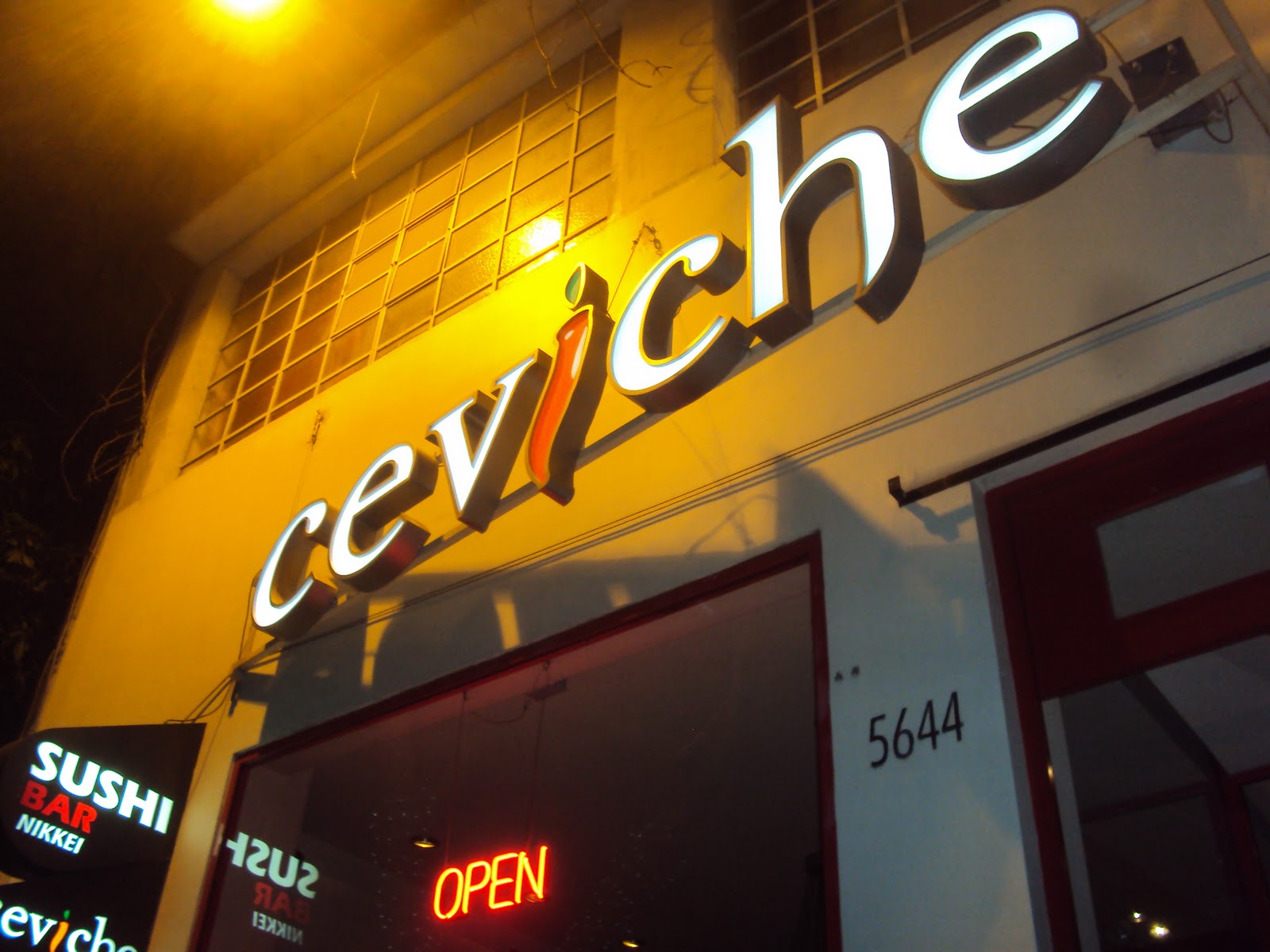
This restaurant logo works

Many restaurants take a less than stellar approach to branding. From so-so logos to hard to understand web sites using way too much Flash to the super cool interior design overpowering what the kitchen actually delivers.

This restaurant does a great job putting it all together. Ceviche is a dish - raw fish to be clear - that comes in many forms and is very popular in various South American cuisines. Hot peppers are a feature of many ceviche dishes. The Peruvian version is particularly famous in part because the Japanese-Peruvian fusion cuisine has been making an international name for itself.

The logo expresses this core offer without any ambiguity and the typography and application are both fun and slightly out of the ordinary.

This restaurant is one of many we have seen that offer awesome Japanese-Peruvian dishes. The commonalities between the two styles of cooking centre on raw fish and the many artful and save ways to prepare it. I never had sushi that was as delicious as this. The service was great, the night was lovely and we sat outside 'til late.

Causa peruana sampler

Warm and cold rolls. Delicious fusion.

Thursday, February 10, 2011

A Concept Restaurant

Palermo district in Buenos Aires.
When recessions or economic downturns hit, restaurant owners can turn to creative solutions to survive in such a tough-at-the-best-of-times industry. (You might remember some of this appearing in North America, too.)

I thought this pitch on the sandwich board that otherwise might tell me what the specials of the day are was well done:

"We give you food, drink and good service ...  You pay what you want, without pressure and prejudice... enjoy yourself."

The restaurant looked like a very fine choice for a great dinner out. It also looked like this was no longer a gimmick to keep people coming but an actual business model a la 2011.

Tuesday, February 8, 2011

Communicating on mountain sides

What are those symbols on the side of this mountain? How do they get there? Who puts them there? And why?
We took both of these pictures in Ollantaytambo which is part of the Sacred Valley in Peru.


The Inka's designers and architects modified mountains
to pay tribute to their gods. Ollantaytambo is a settlement
of the Inka's elite from the mid 1500s. Find the
 face in the middle left section of this image. Probably
represents an important god. (The dominant feature in
the middle are storehouses for the harvest)
Signage cut into mountains was a
common sight in Peru. This one
we spotted in the Sacred Valley. They
are usually political in nature and may
 promote political ideas.


In Peru we encountered a variety of symbols cut into the mountain sides. These were often visible from miles away and usually served political purposes: they promoted a political party or candidates for mayor or parliament, for instance.

This form of 'communicating' reaches back a long time in Peru. For instance, even though the Inca Empire lacked a written language, it did not lack in scientific and communicative prowess. It designed its Sacred Valley outside of Cuzco, Peru to mirror religious aspects of the Milky Way as they perceived it. 

Monday, February 7, 2011

Election advertising in Argentina

I saw this poster wall in Buenos Aires, Argentina in January. The current president, Cristina Fernandez de Kirchner, followed her husband into the presidential role when he could not run again due to the country's constitutional limit. He would have been eligible to run again after being out of office for one term (in contrast to the US system, for instance), had he not died in the fall of 2010.

Here the competitive positioning the opposition has chosen is "Thinking always about you" and the candidate's signature. Now, granted I do not keep up much with daily political life in Argentina. But I am intrigued by the implication of this competitive positioning. It is a thoroughly positive line with thoroughly negative implications, thus, possibly portraying a real choice without the personal attacks designed to confuse and obfuscate that have become the mainstay of US and Canadian electioneering.

As an aside, love the light blue tie on white shirt - so easy to wear the Argentine flag and show a bit  of patriotism. 

Pensando en vos siempre. Buenos Aires, Argentina. Palermo district.

Friday, February 4, 2011

Election advertising in Peru

Just as the Canadian parliament was getting back to work this week, the ruling Conservative Party released election ads for a day that were derided as a personal attack on the leader of the Liberal Party of Canada, and debunked as inaccurate - not to say lies -  on top of that. Of course, there is no election on in Canada  but that hasn't held the governing party back from running ads year round that literally "brand" the competition as "American" and "just visiting". In case you can see the irony in that.
This house is in a remote place called Janca Pampa that
 we visited in October 2010. Alcalde = mayor. 

In any case, it reminded me of something slightly more quaint on the election advertising front:
I was intrigued with a particular form of advertising used widely across Peru and other Latin American countries. People let politicians or political parties paint part of their house in white and then add their political message - for a fee.

Painted houses as we know them in Canada, for instance, are rare in the Peruvian countryside, where most houses are still built using adobe construction. The political messages are usually very simple: mark your "x" in my box. They are also highly visual. In fact, political parties in Peru use highly visual references in their party logos as you can see on that page of regional parties in Ancash province of Peru.

These messages often stay intact for years. How exactly the payment schemes work I don't know, for instance, do they use traffic studies to determine payment, are there per annum flat fees, where does the money come from to pay the local people?

Nonetheless, I hope you'll enjoy this selection of Peruvian election ads. Note: when there was a key message beyond "vote for me" it usually was about "change", "regional power" and "clean hands in government". Pretty simple and tells you a few things about what some of the concerns of the people might be.


Nueva Era is also a regional party.
Here it promotes a
Mayoral candidate
Vote for the team with "clean hands"
ie not corrupt.


Moviemento Independiente  Regional Puro Ancash


Mayoral race marketing. The crossing
out refers to what people are asked to do:
Vote for me!


Thursday, February 3, 2011

Global brand in local market

Palermo district, Buenos Aires
Can you see it?

Yes, it's on the municipal street sign. Click on the photo and enlarge it. There it is! Ah, that's ubiquitous advertising.

Claro and Nokia. Claro is a telecomm company, while Nokia continues to be the number 1 mobile phone maker in the world.

Does your city use street signs for corporate brand awareness? This was everywhere in BA.

By the way Claro's tagline is "Es simple. Es claro." Which is a fun play on words. ("Simple" doesn't mean exactly the same as "simple" in English, but is used more in the sense of "plain, simple-minded", even though here I think "simple" does translate well, while "claro" stands for "OK" or "yes" as well as "clear" or "clearly") Not sure what it does for brand equity that "claro" is one of the words we heard most often when people wanted to express agreement with something - That's got to be good for this rather large Telecom operating in various countries in South America.

Nokia uses its "Connecting People" tagline in Argentina in English as it does around the world. I guess "pueblo conectando" - or the German translation of "Menschen verbinden" didn't pass muster with the global brand guardians.

Wednesday, February 2, 2011

Santa Claus in La Paz

There are many fun parts to travelling. One relevant in this space is how being in a different place changes how we see ads like the one below.

While visiting La Paz, the capital of Bolivia, this past November we came across this Coca-Cola ad using the famous Santa Claus and the wonderful line, "Together we make magic reality."

There are so many interesting layers to this photo:

  • A Coca-Cola ad featuring Santa on a snowy, starry night backdrop the Southern hemisphere in November (that's spring heading for summer)
  • Santa as spokesperson for Coca-Cola (who else does pull this off?)
  • That jolly big man drinking his Coca-Cola
  • The Santa image, it is said, has been shaped significantly by Coca-Cola advertising going back to1931
  • A Coca-Cola ad in Bolivia where Coca leaves are a large crop some destined for traditional uses and some for let's call it "export"and that doesn't even have anything to do with the Coca-Cola formula
  • The statue in the foreground is of Simon Bolivar, Liberator of Bolivia from colonial (Spanish) rule, August 6, 1825.


Thursday, August 19, 2010

What do you want from the web?

I'm preparing training material for a client: "How your Web Presence Can Help You Build a Stronger Profile".
The point of view I am taking is what it really means when your audience can do everything your organization can do online. Think about it: individuals possess the power of the printing press without the cost of printing and distribution. All they need to figure out is how to create content and attract audiences. That of course, is the hard part.


And yet, much of what goes online leaves me with a back to the future sort of feeling.
  • Facebook: Social (Connecting and sharing with your friends)
  • Youtube: TV (Broadcast yourself)
  • Flickr: Photo journalism (The eyes of the world)
  • Twitter: News (What’s happening?)
  • Podcasting: Radio (video) by everyone
That's why the training program will focus on providing an understandable thought framework, and then demystify some of the voodoo - like SEO, UXD (yes, that means user experience design) - to empower my client to think smart and make good decisions as they strengthen their web presence, purposefully and without running off in all directions.

My basic message is that online marketing is about connecting with the right people where they are in ways that are meaningful to them. The enabling aspects are tried and true concepts:
Online channels are about dialogue and conversation; they work because of relevance to the audience and timeliness; and, most difficult of all in this engineered world they demand authenticity.

Monday, January 26, 2009

Economics of fear and sustainable buying practices

Here's a hypothesis for consideration:

With news media reporting - in particular headlines - bleakly declaring the end to life as we know it for many months now, it is inevitable that people feel that the global financial crisis is having a major impact on their lives. This feeling is spawned by what we are told day in and day out at least as much as it stems from real losses in employment or investment portfolios.

Sustainable buying practices might well be on the rise. Those are practices not based on personal debt financing and overleveraging to "get things now". They are built on concepts of need, affordability, prioritization and saving for specific purchases. As this shift occurs it demands equally sustainable pricing practices, elastic enough to be responsive to the market and to ensure the survival of the business beyond this crisis. It means the "traditional" growth model has to be rethought in terms of "sustainable exchanges".

Any business model but especially those based on debt financing will have to be rethought in the context of needs, wants and sustainable personal - and business - finance.

I imagine it also means customer value propositions will increasingly include price related incentives, meant as short-term fixes to stimulate consumption. But in business only a few can survive on low price positions, the rest need greater differentiation to sustain their business. I imagine the competitive landscape will increasingly be thought to include alternatives across sectors of the economy, not just direct competitors within a specific sector.

If the above is so, what does that mean for how I think about performing arts marketing and sustainably developing audiences?

Sunday, January 25, 2009

Thoughts on Making Buying Decisions

Some purchases we make require very little critical thinking - and some that would benefit from weighing options more carefully are made using overrides. ("I want it", "my neighbour has it already"). Some purchases receive a great amount of attention - often those that cost a lot of money, but not always.

One way to think about performing arts marketing is that we endeavour to recruit buyers who are willing to use convenient overrides so that they subscribe year after year, regardless of the specifics of the programming or other aspects of the overall customer experience.

This is important because arguably purchasing several live performing arts events in a single transaction (subscription) has significant implications for the buyer: time commitments, long terms planning and their financial capacity to pay in advance.

What are the circumstances required for someone to make a complex purchase in a mostly automatic fashion? And is it realistic with emerging audiences or is that a model of a time that is coming to an end?